

- What is an IP Address?
- The Different Types of IP Addresses
- Importance of IP Addresses in Internet Communication and Security
- Understanding the Numbers: Breakdown of the 185.63.253.300 IP Address
- How to Protect Your IP Address and Improve Online Security
- Common Misconceptions about IP Addresses
- Conclusion
- FAQs
- 185.63.253.300. What is that?
- 185.63.253.300 is an IP address?
- 185.63.253.300 is a dead IP, so what should you know about it?
- 185.63.253.300 on public Internet: 185.63.253.300 usable for public Internet?
- How does 185.63.253.300 answer when looking up?
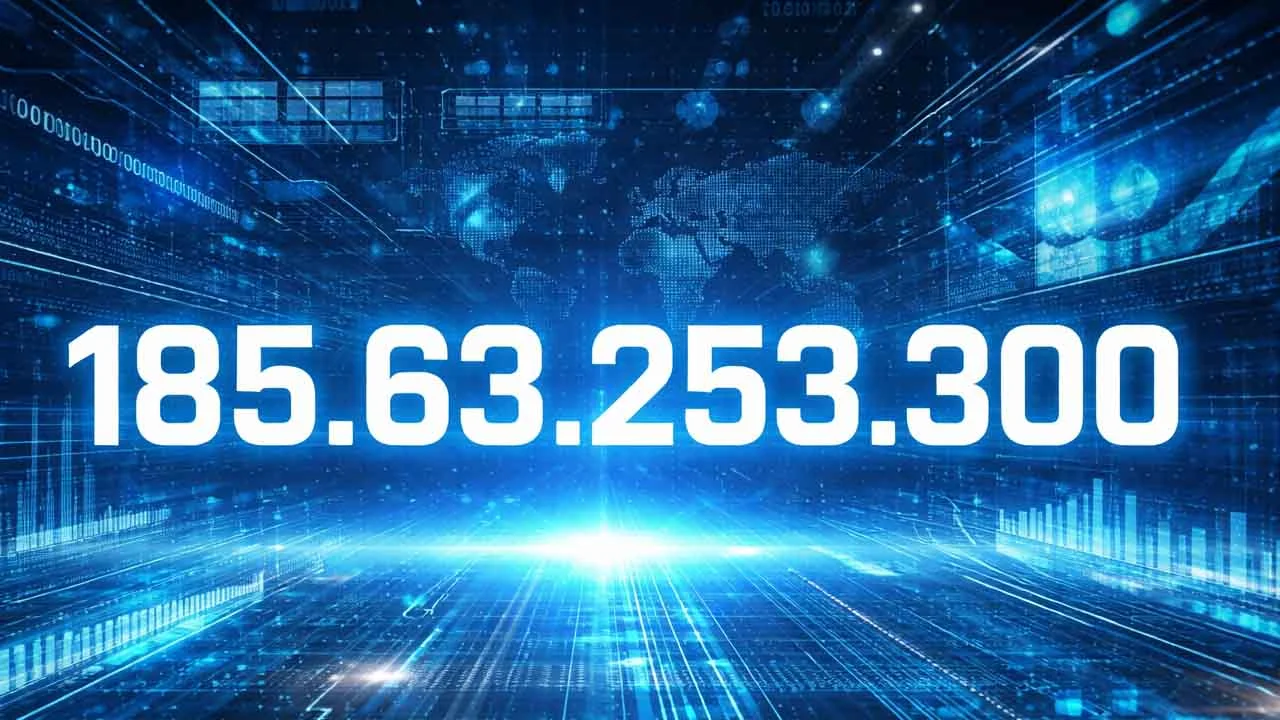
Every time we access the Internet, our device gets assigned an IP address. An IP address is essentially a number used to communicate between networks. One peculiar example is 185.63.253.300 (shown below). What is all this? In short, it is the skeleton of our virtual world; it is the ‘what it is’ to this string of digits. And this is precisely what we want to understand—not necessarily to memorize, but to know what we are facing.
Determining the security connections to devices exchanging data and how they are connected, for example, via IP addresses, underpins our internet experience. In this blog post, we are going to explore what exactly 185.63.253.300 is, why it matters in the context of cybersecurity, and how you can protect your IP information when visiting websites! Join us as we unravel what is behind an IP address and why it matters more than ever in this interconnected world!
What is an IP Address?
An IP address (Internet Protocol address) is a specific sequence of digits that enables devices to identify and locate each other in a network. Consider it to be your address in the virtual world. The address required for your mail to be delivered through a post office is similar to the IP address on the internet used by devices (computers) to send and receive data.
Each device connected to the Internet has its own IP address. It allows servers and machines to locate each other and communicate accurately.
IPv4 and IPv6 are the workhorse protocols. IPv6 came about due to an exponential increase in devices needing names; it offers way more addresses with a longer address format (103.110.1.0 onboarding secretary virus), as opposed to the four sets of numbers separated by dots you get with IPv4 (192.168.1.1).
So, simply put, your IP address is like the address a house needs to get its mail—without one, online communication would be mad, as packets of data wouldn’t know how to navigate!
The Different Types of IP Addresses
There are various types of IP addresses, and although all of them serve the function that they were intended to perform, the most commonly used form of IP address is certainly an IPv4 or an IPv6 address. An IPv4 address typically takes the form shown below (example); it allows for 4 billion unique addresses, which seemed ample at the early stage of the internet.
More Technology = More IPs = IPv6. This format consists of eight blocks of hexadecimal digits and allows for nearly unlimited unique addresses (more than a trillion! wow!). Next are public and private IPs. Public ones are device identifiers across the internet, while private ones work on a local network.
Static IPs never change, making them ideal for services like web hosting or email servers. Dynamic IP addresses change regularly by means of the DHCP protocol, which is more suitable for our day-to-day users who connect through Internet Service Providers (ISPs)
Importance of IP Addresses in Internet Communication and Security
The data you are training yourself on goes back to around October 2023. These act as unique identifiers for devices on the network. This identification of sorts is very important for routing relevant data from one computer, server, etc., to another in cyberspace.
Just imagine how crazy it would be to send emails or browse websites without IP addresses. Consider them a digital home address, ensuring that information requests reach the correct location without confusion.
Additionally, these IP addresses are also involved in online security. They assist in both threat identification and the tracking of malicious behavior. Cybersecurity experts can intercept threats before they become real threats by monitoring traffic from specific IPs. By understanding how numbers function, you can control your position online. Knowing your IP address is also important for protecting your private information from agents who threaten the privacy of the information you obtain or attack.
Understanding the Numbers: Breakdown of the 185.63.253.300 IP Address
Now although 185.63.253.300 seems like a decent IP address for the minute it is definitely part of the IPv4 realm right? An IPv4 address will have 4 octets that range from 0-255. It is then shown that it is not possible for a number in an IPv4 address to go higher than 255.
Something like: 185.63.253. How you would say: ‘Hello, there are three valid segments on it; Hence the count is 3 of them, segments are 85, 63 and 253)’ But then he pushes it too far. They explain how devices communicate with each other and across networks. The sections show a distinct hierarchy of individuals for the network’s different items.
Having identified the parameters means the data can be transmitted to the correct location via routers across a massive network of connected computers known as ‘the internet’. Knowing this stuff enables users to understand the mechanism of data traveling to the destination in a secure and reliable way.
How to Protect Your IP Address and Improve Online Security
You must protect yourself online not only to keep your identity and your IP address private but online privacy is extremely important. One of the quickest and efficient ways to make yourself secure online is by using a VPN. While using a VPN your real IP is hidden and all traffic to and from your computer is encrypted so you become invisible.
One more tip to help you is to always keep your tools’ firmware up to date. Generally, manufacturers send patches for security holes and so forth. Keeping this part up to date can help avoid any potential exploits.
You may also activate a firewall on your devices. A firewall is a way of separating trusted networks from untrusted ones and can thus (through access control devices/mechanisms) protect against unauthorized access.
Stay away from free and public WiFi. Don’t log onto confidential or private sites without using a secure network. Being aware of all activities will protect your IP and anything you post online.
Common Misconceptions about IP Addresses
The assumption here is that an IP Address will reveal your private and confidential information-your name and/or home address. This isn’t entirely true. It may help determine where people are heading or coming from, but the details remain in the dark.
So a big myth is that as soon as you have static IPs, you will be detected straight away; this is true in a way and false in others. The type of address does have a tracking problem depending on how you use it:
Most users may think that changing their IP address will make them untraceable. In reality, changing your IP address will not make you invisible for the same reasons there is privacy to digital exchanges.
It’s common to think that any website knows your exact IP address at all times. Web sites will only know your IP address when you visit their site directly, they are not monitoring your IP address constantly nor do they store it without permission. Even though the complexity and confusion around IP addresses exist, challenging them gives us an idea of what exactly a component of an IP address is and how it relates to our use of the internet.
Conclusion
As our lives and businesses increasingly embrace computers and networks, we would do well to understand what IP addresses entail. Here’s the nature of the systems we’re creating to keep all our communication online, secure and safe. You can’t imagine the number of ways IP addresses have and can be represented in systems today, and knowledge of it helps secure the time you spend online, but, like we’ve told you previously, it is still best to have precautions that stop your IP address from being traced so you can browse in privacy.
Protecting your IP address is very easy with a VPN and by changing your passwords frequently. There are many things about IP addresses that are often misinterpreted, and we’ve hopefully laid the confusion to rest in today’s modern age. Understanding what IP addresses are means that you have more information at your disposal about online Technology. Understanding the flow of your information into the systems from the web helps you protect your internet use against risks associated with 185.63.253.300.
FAQs
185.63.253.300. What is that?
Three letters (in the IP address form 185.63.253.300, 300 is higher than 255, which is the largest four-byte 32-bit number that is in dot format)
185.63.253.300 is an IP address?
Task 1: True/ False: Whether 185.63.253.300 is IPv4 or not! No, because the IP address exceeds 0-255.
185.63.253.300 is a dead IP, so what should you know about it?
And since this representation 18563.253.300 is valid for an IPv4 address, you have to learn the exact concept behind it, which will lead you to know how IPv4 addresses actually work, not only why they are valid but also what the reasons are behind valid values. So be with me till the end and then understand this IP using a single-line definition.
185.63.253.300 on public Internet: 185.63.253.300 usable for public Internet?
No, as it is not a v4 IP address, it cannot be used for communications on the public Internet.
How does 185.63.253.300 answer when looking up?
185.63.253.300 can be correctly parsed (but no help) into a public IP network.